Signs Your Home Needs Gutter Cleaning in Hackettstown Right Away


Gutters tend to fade into the background until they stop doing their job. Then the damage shows up fast, and usually in places homeowners do not check every day. In Hackettstown, that pattern is especially common. You get spring pollen, summer downpours, falling maple seeds, autumn leaves, and winter freeze-thaw cycles that expose weak spots in a gutter system almost overnight. A gutter that looked merely messy in October can become a drainage problem by the first hard rain, then a siding, roofline, or foundation problem not long after.
Homeowners often assume gutter trouble means they will see water pouring over the edge in dramatic fashion. Sometimes that happens, but more often the early signs are quieter. A dark streak on fascia. A plant sprouting from the trough. A mulch bed that keeps washing out in the same corner. A basement wall that feels damp after a storm. Those details matter. In my experience, the houses that avoid expensive repairs are not the ones with perfect gutters, they are the ones where someone noticed the small warnings and acted before clogged gutters turned into structural moisture issues.
If you have been putting off gutter maintenance, here are the signs your home likely needs gutter cleaning in Hackettstown right away.
Water spills over the sides during rain
This is the most obvious warning, and it should never be ignored. Gutters are designed to catch roof runoff and move it toward downspouts in a controlled way. When water instead sheets over the outer edge, something is interrupting that flow. In many cases, the cause is straightforward: leaves, seed pods, grit from shingles, and compacted organic debris have built up and created a dam inside the channel.
Overflow is more than a nuisance. The water does not just fall neatly to the ground. It often runs down siding, splashes against windows, soaks trim, and pounds the soil around the foundation. On homes with flower beds near the perimeter, you may see trenches washed into the mulch or exposed roots around shrubs. If the problem keeps happening, the ground near the house can settle unevenly or stay saturated long enough to contribute to basement seepage.
Hackettstown homes with mature trees are especially vulnerable to this. A single season of leaf drop can fill more of a gutter than most people expect, especially where roof valleys direct heavy runoff into one section. Even if the rest of the gutter looks passable, one clogged stretch can create overflow at exactly the worst point.
You see plants, moss, or a thick mat of debris in the gutter
Anything growing in a gutter means water and organic material have been sitting there long enough to create soil. That is not a maintenance issue anymore, it is a sign that your drainage system has been neglected for some time. Small tufts of grass or weeds may seem almost comical from the ground, but they tell you the gutter is holding moisture constantly, and that added weight strains the fasteners and fascia.
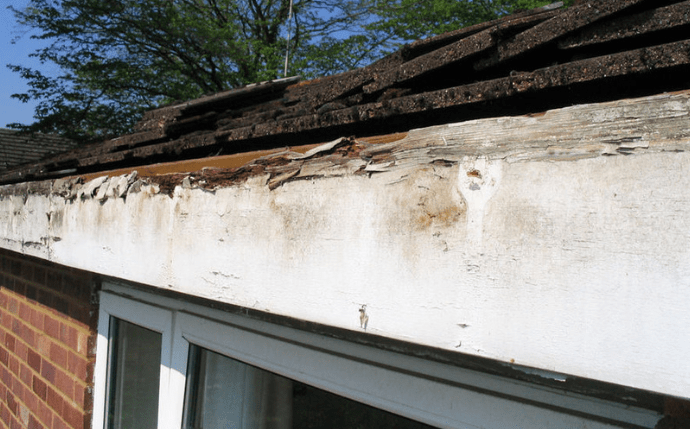
Moss along the roof edge can point to a similar issue. When gutters stay packed and wet, moisture can back up under the first row of shingles or keep the roofline from drying properly after rain. On older homes, that dampness tends to show up first as discoloration, soft wood, or peeling paint near the eaves.
One detail I have seen many homeowners miss is the “flat top” look. From the yard, the gutter appears level with a rounded edge of packed leaves sitting just above it. That usually means the trough is filled almost to capacity. At that point, even a moderate rain can push debris toward the downspout opening and create a sudden clog.
Downspouts are dripping weakly or not draining at all
Sometimes the gutter itself looks fine from below, but the downspouts tell a different story. During a storm, you should see a steady stream of water exiting the bottom of each downspout. If one outlet only drips, pulses irregularly, or stays dry while nearby roof sections are clearly shedding water, there is likely a blockage somewhere in the system.
The clog may be at the top near the downspout opening, inside an elbow, or lower down where compacted debris has trapped grit and roof granules. In cold weather, a partial blockage can be even worse because trapped water freezes inside the downspout and prevents drainage altogether. That weight and pressure can pull sections apart or force water back into the gutter.
When homeowners search for Gutter Cleaning Hackettstown services, this is often the symptom that finally gets their attention. They notice one corner of the house is always wetter than the others, or they hear rain pounding the gutter but do not see proper discharge below. The system is trying to work, but the bottleneck is keeping it from doing the job.
The gutters sag, pull away, or look uneven
A clean gutter is relatively light. A clogged gutter full of wet leaves, sludge, and standing water is not. That extra load stresses hangers, spikes, brackets, and the wood they attach to. Over time, the trough begins to sag in the middle, dip at one end, or separate from the fascia board.
This is where delayed maintenance gets expensive. Some homeowners assume sagging means the gutter just needs to be resecured, but often the underlying issue started with simple debris buildup. Once fasteners loosen or the fascia begins to rot, cleaning alone may not solve everything. You may need both cleaning and repairs to restore proper pitch and support.
Uneven sections also create a feedback loop. Water settles in the low spots, more debris sticks there, and the gutter becomes even heavier after each storm. In winter, standing water in those dips freezes, expands, and pushes joints apart. By spring, what started as a cleaning issue can turn into leaks, separation at the seams, or damage to the roof edge itself.
Stains on siding or streaks on the fascia are showing up
Exterior staining often tells a story before a homeowner ever climbs a ladder. Vertical dirt marks on siding beneath the roofline usually mean water has been running where it https://gregorywqsd606.juniperbrief.com/posts/the-homeowner-s-guide-to-gutter-cleaning-in-hackettstown should not. Brown or black streaks on the fascia board can indicate repeated overflow or trapped moisture at the gutter edge. On light-colored trim, these signs become visible quickly.
Not every stain comes from clogged gutters, but when the marks appear directly under the gutter line or near corners and downspouts, they deserve attention. The same goes for peeling paint around the eaves. Paint fails early when wood stays damp, and clogged gutters are a common reason that area never dries properly.
In Hackettstown, where seasonal weather shifts can be sharp, moisture damage tends to accelerate once it begins. A wet fascia in late fall can become freeze-related cracking in winter, then visible paint failure by spring. The problem often looks cosmetic at first, but the moisture behind it may be affecting wood and fasteners.
The basement or crawl space feels damp after rain
A lot of drainage problems that seem to belong to the roof actually show up below grade. If your basement smells musty after storms, or a crawl space stays damp with no obvious plumbing issue, clogged gutters should be on your list of suspects. When gutters overflow, they dump a surprising amount of roof runoff right next to the foundation. If the grading is imperfect or the soil is already saturated, that water has nowhere good to go.
This connection is easy to overlook because the symptoms are separated. The roof is up high, the moisture is down low, and the delay between rain and indoor dampness can be several hours. But on many homes, especially older ones, poor roof drainage and foundation moisture go hand in hand.
I have seen homeowners spend time worrying about dehumidifiers, sealants, and basement ventilation while ignoring the overflowing gutter above the same corner. Those interior fixes have their place, but they cannot compensate for water being dumped beside the foundation every time it rains.
Mulch washes away or the soil around the house looks eroded
Landscape damage is one of the clearest signs that runoff is no longer being controlled. If you keep replacing mulch in the same bed, notice bare spots beneath the eaves, or see little channels carved into the soil after rain, water is likely overshooting or spilling from the gutter.
This matters for more than appearance. Erosion can expose roots, undermine walkways, and gradually alter how water moves around the house. Once the soil profile changes, runoff tends to follow the new path, which can create a chronic wet zone against the foundation or near a porch footing.
One practical clue is asymmetry. If one side of the house looks normal while one corner is constantly battered, pay attention to the gutter above that spot. A localized clog, disconnected downspout, or badly pitched section is often the cause.
Pests are gathering around the roofline
Clogged gutters make excellent habitat for insects and other pests. Wet leaf matter attracts mosquitoes, ants, and flies. Birds may pull debris for nesting. Rodents sometimes use overgrown gutters or nearby overhanging branches as part of their route along the house.
Homeowners usually notice the activity before they realize the gutter is the draw. You may see birds constantly pecking around one section, or notice an uptick in mosquitoes near an entry door despite no obvious standing water at ground level. If the gutter is holding water and debris, it is creating shelter and moisture where there should be neither.
This becomes more urgent when pests gain access to soffits or roof edges already softened by moisture. Once water damage and pest activity overlap, repairs become far more involved than a routine cleaning appointment.
Icicles and ice buildup keep forming at the gutter edge
Winter in Warren County has a way of exposing drainage weaknesses fast. While not every icicle means the gutter is clogged, heavy ice formation along the edge of the roof often points to poor drainage combined with freezing temperatures. If gutters are packed with debris when winter arrives, melting snow cannot move through the system properly. The water backs up, refreezes, and adds more weight to the gutter.
That ice can bend metal, loosen fasteners, and contribute to ice dams at the roof edge. Once water starts backing up under shingles, the repair stakes rise sharply. Interior staining on ceilings or wall tops sometimes traces back to this exact sequence.
The important judgment call here is timing. If you notice frequent winter ice at the eaves, the best fix is usually not a mid-freeze scramble. It is making sure gutters are properly cleaned in the fall so water has a clear path before temperatures drop.
You cannot remember the last time they were cleaned
This may sound simple, but it is one of the best predictors of trouble. If you have lived in the home for a year or two and do not know when the gutters were last cleaned, there is a decent chance they are overdue. If your property has oak, maple, pine, or any large overhanging trees, the maintenance interval can be shorter than many people expect.
Frequency depends on tree cover, roof design, and weather. Some homes do fine with one thorough cleaning a year. Others need attention in late spring and again in fall. Houses with roof valleys, screened porches below gutter lines, or dense tree canopy often collect debris faster in specific sections than in others.
A practical rule is this: if you are already seeing one or two mild warning signs, and you also cannot remember the last cleaning, waiting longer rarely helps.
Why Hackettstown homes are particularly prone to gutter issues
Local conditions play a real role. Hackettstown neighborhoods include older homes with mature trees, newer developments with varied rooflines, and properties where wind can push leaves into corners and valleys. Seasonal transitions are not gentle on gutters here. Spring brings pollen and seed litter that mix with grit. Summer storms test flow capacity. Fall packs troughs with leaves. Winter turns standing water into ice.
Roof style matters too. A simple ranch with minimal tree cover may shed water cleanly for longer periods. A two-story colonial with multiple valleys and surrounding maples can clog much faster, even if both homes are on the same street. That is why generic advice about cleaning “once in a while” is not very useful. The right schedule depends on how your house actually handles debris and water.
This is also why homeowners looking into Gutter Cleaning Hackettstown providers should think beyond just removing leaves. A proper visit should reveal whether the gutters are draining correctly, whether downspouts are clear, and whether any sections have begun to loosen, pitch backward, or separate at the seams.
What to check from the ground before calling for service
You do not need to climb onto a ladder to spot most urgent warning signs. A careful walk around the property after or just before rain can tell you a lot. Look up at the gutter line, check where downspouts discharge, and pay attention to any repeated wet spots around the perimeter.
Here are five useful things to look for from the ground:
- Overflow marks or fresh water stains beneath the gutters.
- Visible debris, plant growth, or dark packed material along the gutter edge.
- Downspouts that discharge weakly compared with others during rain.
- Sagging sections, separated joints, or corners pulling away from the house.
- Soil erosion, washed-out mulch, or puddling near the foundation.
That quick inspection often gives enough information to decide whether the problem is routine maintenance or something more advanced.
When cleaning is enough, and when repairs are part of the job
Not every gutter issue ends with a simple cleaning. Sometimes debris is the whole problem, and once it is removed the system drains normally again. Other times, cleaning reveals damage that had been hidden by the clog. A bracket may be loose. A seam may have failed. The pitch may be off enough that water ponds even after the gutter is empty.
The distinction matters because homeowners can feel frustrated when they pay for cleaning and still have issues afterward. In many cases, the cleaning was necessary, but it exposed that the gutter had been under strain for too long. This is especially common with older systems where years of weight and seasonal expansion have weakened attachments.
A good technician should be able to explain that difference clearly. If the gutter is structurally sound, a thorough cleaning and flush may be all you need. If sections are warped, detached, or rotting the fascia, delaying repairs only invites a repeat problem.
The cost of waiting is rarely just about the gutter
People often postpone gutter maintenance because it seems non-urgent compared with a roof leak, HVAC issue, or appliance failure. The irony is that neglected gutters often lead to exactly the kind of high-cost repairs homeowners were trying to avoid. Exterior paint failure, fascia replacement, landscape erosion, foundation moisture, and interior water staining all cost more than routine service.
There is also a timing issue. Gutter problems rarely improve on their own. Debris compacts. Water finds weaker paths. Small misalignments become bigger under repeated load. By the time there is visible interior damage, the original cause may have been active for months.
That is why the phrase “right away” matters in this context. It does not mean panic at the first leaf you see. It means that once your house starts showing clear symptoms, you are beyond the point where waiting is helpful.
A sensible next step for homeowners
If you have noticed overflow, sagging, weak downspout flow, staining, dampness near the foundation, or obvious debris buildup, your home is telling you something useful. The signs are not subtle once you know how to read them. In Hackettstown, where weather shifts and tree cover put steady pressure on gutter systems, those warnings deserve prompt attention.
The smart move is to inspect the problem from the ground, note where symptoms are concentrated, and schedule service before the next heavy storm turns a maintenance task into a repair job. Whether your home needs a straightforward cleaning or a closer look at drainage and alignment, acting early protects more than the gutters themselves. It protects the roof edge, the siding, the landscape, and the structure below them all.
Just Gutters LLC
Address: 262 Main St, Hackettstown, NJ 07840
Phone number: +12013319454
FAQ About Gutter Cleaning Hackettstown
How much should a gutter clean cost?
Professional gutter cleaning typically costs between $163 and $333, with a national average of around $210 to $250 for a standard-sized home.
What months should you clean gutters?
You should clean your gutters twice a year—once in late autumn (November to December) and once in late spring (April to May).
Is it worth paying for gutter cleaning?
Yes, paying for gutter cleaning is worth it because it prevents thousands of dollars in water damage, roof leaks, and structural repairs.